
Real‑Time Ultrasound
A visual biofeedback tool to improve muscle activation, coordination and movement control.
About real‑time ultrasound
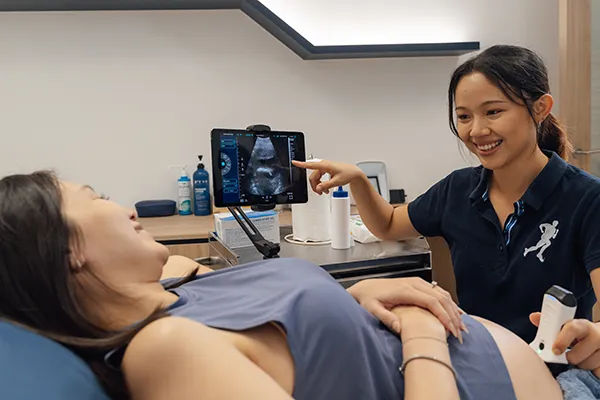
Real‑Time Ultrasound uses live ultrasound imaging to help you and your physiotherapist observe how deep muscles activate during specific movements or exercises. Rather than treating tissue directly, this approach provides visual feedback so you can learn to engage the right muscles with more accuracy. It’s commonly incorporated into rehabilitation for core stability, pelvic floor function and shoulder, hip or neck control when muscle timing and coordination are key.
What is real‑time ultrasound for?


How real-time ultrasound may help
Ready to start?
Real‑time ultrasound: how it works
Frequently asked questions
Is real‑time ultrasound the same as therapeutic ultrasound?
No. Real‑time ultrasound uses imaging to monitor muscle activation patterns during movement, while therapeutic ultrasound uses sound waves to deliver energy into tissue. They serve different purposes in physiotherapy.
What conditions can this help with?
Will it replace my exercises?
No. Real‑time ultrasound is a biofeedback tool. It improves how you perform exercises, but it is usually part of a broader physiotherapy plan including strength, movement and functional training.
Do I need a referral?
Most people can access physiotherapy and ultrasound without a referral. However, some insurers or funding pathways may require a referral — it’s best to check with your provider or clinic.
Why us?
Visual feedback for precision training
We use real‑time ultrasound to give you clear visual insight into how your muscles function, making rehabilitation more targeted and effective.
Tailored movement retraining
Your program will be personalised, combining ultrasound with guided exercises, manual therapy and movement strategies to help you regain confidence and control.
Skilled clinical guidance
Our physiotherapists incorporate this technology within a broader assessment and rehabilitation framework, ensuring your recovery is based on accurate muscle patterning and functional improvement.
Ready to get started?
If you’re having difficulty engaging the right muscles or your rehabilitation isn’t progressing as expected, real‑time ultrasound may help clarify what’s happening and improve your movement pattern with clear visual feedback.
Book your session and take a confident step towards more precise recovery.